Know Exhaust Fans: Their Specific Role & Advantages
The exhaust fan acts like a mechanical genius designed to make an environment comfortable by exhaling all the air outside. Instead of just existing, it has a noble mission – purifying indoor air by getting rid of stale air, pollutants, and excess moisture from tight spaces like kitchens, bathrooms, lofts, and other enclosed areas where good ventilation is crucial.
These devices, looking impressive on walls or ceilings, have a motorized fan blade tucked behind a vent or grille. When turned on, the fans, acting like a breathing maestro, suck in the surrounding air and push it outside. This creates a kind of vacuum that invites fresh air through open windows or doors. In kitchens, exhaust fans perform a crucial dance, spinning around to eliminate cooking smells, excess heat, and extra humidity, creating a comfortable and healthy environment. In hygiene areas, they play a vital role in getting rid of unpleasant odors and preventing the growth of mold and mildew.
These fans come in different sizes and designs to fit various spaces and ventilation needs. Some advanced models even have built-in sensors that can detect rising humidity levels or specific pollutants, automatically turning on when needed. In summary, exhaust fans are essential parts of modern buildings, contributing to the well-being of occupants and maintaining a healthy atmosphere for living or working.
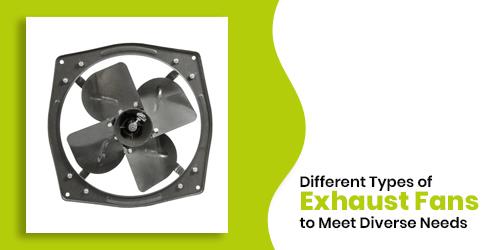
Different Types of Exhaust Fans to Meet Diverse Needs
Exhaust fans play a crucial role in keeping the air clean in different spaces. Various types of exhaust fans are designed to meet specific needs. Let’s have a look at a few of them:
- Ceiling Exhaust Fans: These are commonly used in bathrooms and kitchens to remove moisture, smells, and pollutants. They are compact and fit well on the ceiling.
Wall-Mounted Exhaust Fans: Perfect for places with limited ceiling space, like workshops or garages, these fans are mounted on walls to circulate fresh air and get rid of stale air.
Inline Exhaust Fans: Placed within ventilation systems, these fans are effective in small spaces and are important for maintaining air quality in large commercial buildings.
Kitchen Exhaust Hoods: Specifically made for kitchens, these fans work with range hoods to eliminate cooking smells, smoke, and odors, preventing the buildup of kitchen residues.
Bathroom Exhaust Fans with Light: These fans, installed in bathrooms, not only remove humidity and odors but also provide light, serving a dual purpose.
Attic Exhaust Fans: Used in attics, these fans regulate temperature and expel hot air, preventing damage to the roof and insulation.
Roof-Mounted Exhaust Fans: Common in industries, these fans on rooftops ensure proper airflow in large spaces like manufacturing plants and storage areas.
Exhaust Fans for Grow Rooms: Specifically designed for indoor gardening, these fans help control temperature and humidity, creating the right conditions for plant growth.
Basically, exhaust fans come in various types, each designed for specific environments. Choosing the right one depends on factors like space size, types of pollutants, and the specific needs of the application.
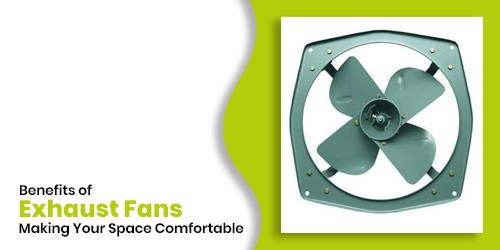
Benefits of Exhaust Fans: Making Your Space Comfortable
Exhaust fans are essential for maintaining a healthy and comfortable indoor environment by providing various benefits. Firstly, they help improve air quality by getting rid of pollutants, odors, and moisture, especially in places like kitchens and bathrooms where these can build up.
Secondly, exhaust fans play a key role in preventing the growth of mold and mildew. By efficiently removing moisture from enclosed spaces, they create unfavorable conditions for these microorganisms, reducing the risk of health issues and structural damage. Additionally, maintaining the right humidity levels helps preserve the integrity of building materials.
Moreover, these fans contribute to temperature control. In warmer climates, they expel hot air, promoting better ventilation and cooling indoor spaces. In colder climates, they help reduce humidity, preventing condensation on windows and surfaces.
Energy efficiency is another significant advantage of exhaust fans. By expelling stale air and bringing in fresh air, they improve overall ventilation, reducing the reliance on mechanical cooling or heating systems. This can help lowering energy consumptions and utility costs.
In short, exhaust fans offer several benefits, including improved air quality, mold prevention, temperature control, and energy efficiency. Incorporating them into residential or commercial spaces is crucial for creating a healthier, more comfortable, and energy-conscious living or working environment.
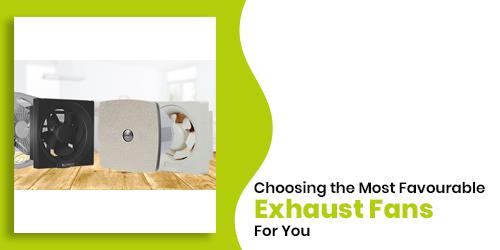
Choosing the Most Favourable Exhaust Fans for You
Selecting the right exhaust fan involves considering several factors to ensure it works efficiently. Begin by evaluating the size of the space and choose a fan with a capacity measured in cubic feet per minute (CFM) that matches or exceeds the room's volume for effective ventilation.
For residential or quiet environments, pay attention to the noise level, measured in decibels (dB). Opt for fans with lower dB ratings for quieter operation without sacrificing performance.
To minimize long-term operational costs, prioritize energy efficiency. Look for exhaust fans with high Energy Star ratings or those with features like variable speed settings, allowing you to customize airflow and reduce unnecessary energy consumption.
Consider the durability and maintenance requirements of the fan. Choose models with robust materials and features like rust-resistant coatings for a longer lifespan. Easy-to-clean designs and accessible fan blades make maintenance simpler.
Explore additional features such as built-in humidity sensors or motion detectors that activate the fan when needed, enhancing overall efficiency and reducing energy waste.
Lastly, think about the installation process. Choose fans with user-friendly installation instructions and compatibility with existing electrical systems.
In short, prioritize exhaust fans based on CFM, noise level, energy efficiency, durability, additional features, and ease of installation. By carefully evaluating these factors, you can select an exhaust fan that suits your specific needs and preferences.